Cavin - The Mobile & Autonomous E-Car Charging System
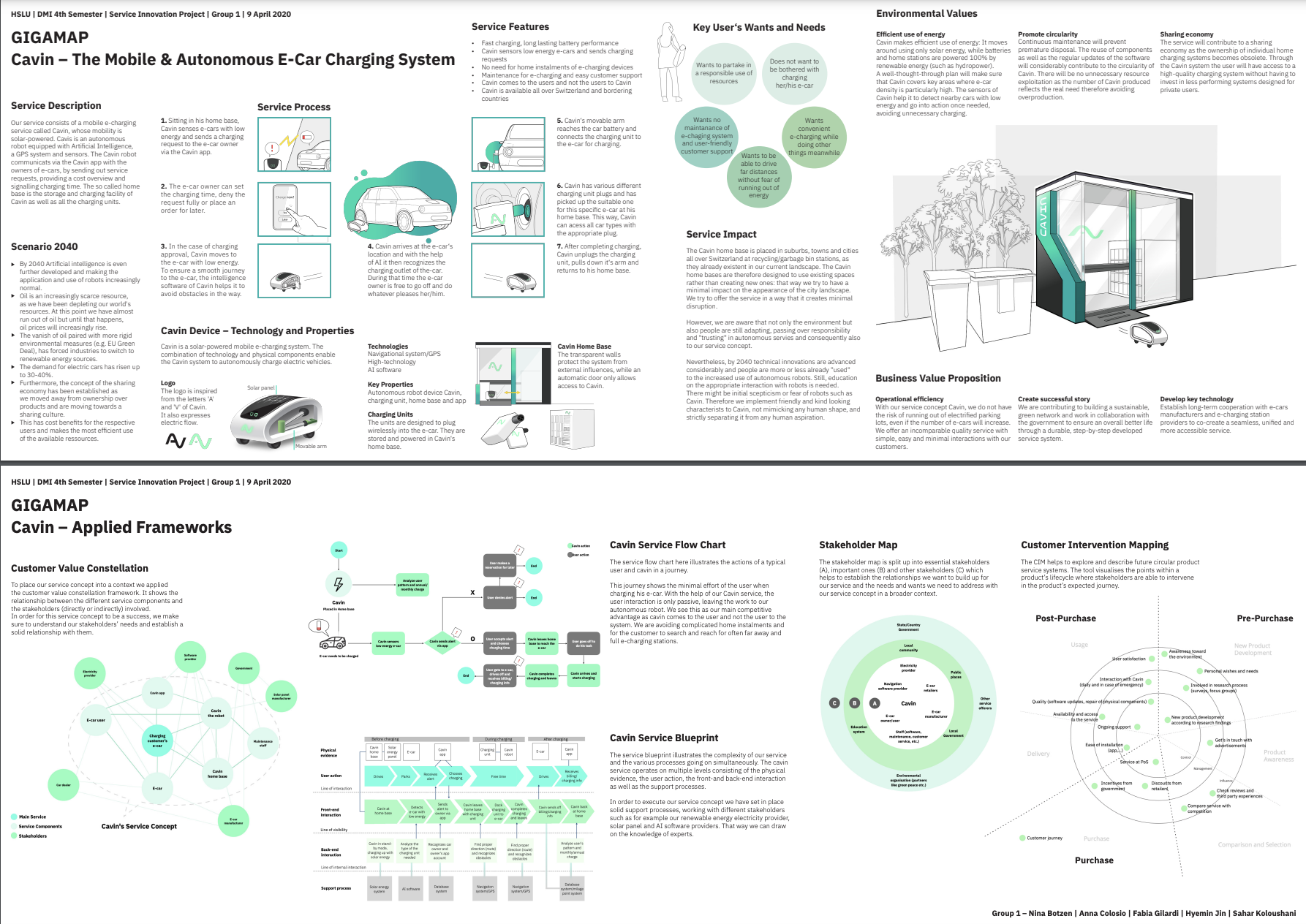
Cavin, a mobile e-charging service, is an autonomous robot equipped with a AI software, GPS paired with a navigational system as well as sensors. Cavin is based in one of his charging docks, his so-called home based. At this dock all the batteries are stored and loaded up.
Cavin works as follows: Cavin, equipped with high-technology fine sensors, can sensor whenever an electric car is running low on battery. Once a car has “grabbed his attention” Cavin sends out an alert via the Cavin App that goes directly to the owner of the e-vehicle. The alert informs the owner that his/her car is running low on battery and asks for allowance so that Cavin can dock on to the car to start charging. The owner can either deny the charging request sent by Cavin, or has then the possibility, in case he accepts the request, to type in his time availability, so the respective time that the owner wants Cavin to keep charging.
Once this is done and Cavin gets the charging approval, Cavin will leave his docking station together with a full battery and find the car, docks the battery on to it and starts charging. Cavin will go back to his home base, scanning for other cars that need charging, and start the whole process over. Whenever one charging session is finished, Cavin comes to pick up the battery again and brings it back to the home base charging station. The owner meanwhile doesn’t have to worry or bother and can go about his normal course of the day.
The benefit that the Cavin charging system offers is that owners of electric vehicles never have to worry about running out of battery ever again. They will always have a charged car whenever they find themselves in the Cavin operating radius.
The concept will start as a pilot project in a district in Zürich City where we identified the highest density of electrified cars. Because our solution is easily scalable, we will then as demand grows, expand our service to other areas of the city.
Designing an innovative service required a close relationship between clients and designers. The close relationship unable designers to fully understand user, this understanding can empower designers to work beyond the initial scope of projects and achieve radical design-driven innovation. Through this project, I understand the importance of user’s need in service design and moreover its effects to create sustainable competitive advantage for companies. In order to implement service design and adopt human-centered approach we need to rethink production, methods and approaches and come up with service which offers benefit for stakeholders.
The benefits that service would deliver include economic, social, and environmental values:
- Environmental Value – effectively and efficiently use of resources
- Social Value – fulfil customer wants and need
- Economical Value – Customer satisfaction and Sustainable competitive advantage for companies